

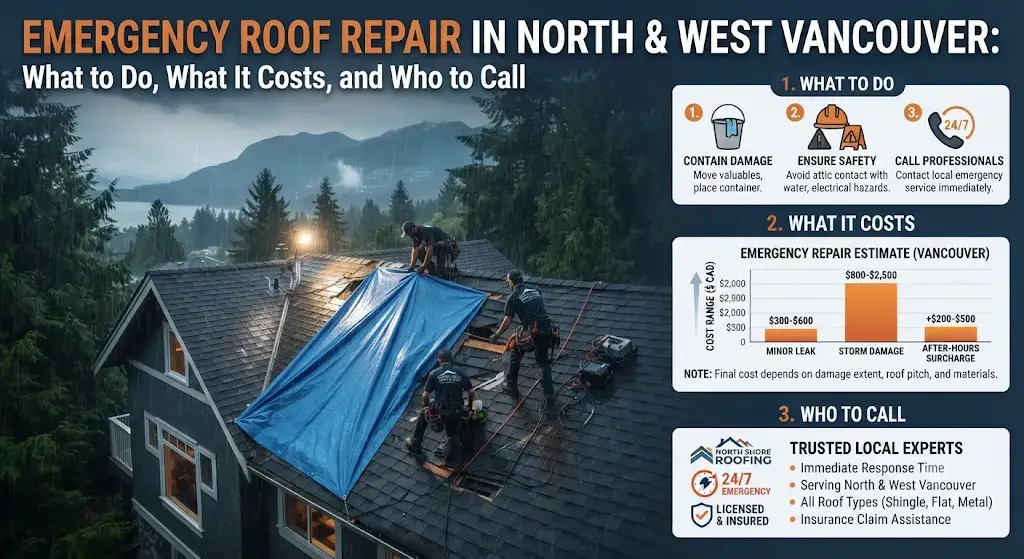
A ceiling stain that grows overnight. Shingles scattered across the lawn after a windstorm. A steady drip in the attic during a November atmospheric river. On the North Shore, roof problems rarely wait for a convenient week.
This guide explains what counts as a roof emergency, what to do in the first hour, how emergency repairs differ from minor ones, what affects the price, and how to pick a reliable roofer when you search for emergency roof repair near me in North Vancouver or West Vancouver.
What Is Emergency Roof Repair?
Emergency roof repair is urgent work that stops active water entry or structural danger, usually with a temporary seal such as a tarp or sealant, until a permanent fix can be scheduled. It is used after storm damage, fallen branches, or sudden leaks, and it is normally followed by a full repair once the weather and the damage allow.
Is It an Emergency or Can It Wait?
Not every roof problem needs a midnight call. Use this table as a quick check.
| Situation | Emergency (act today) | Can wait a few days |
|---|---|---|
| Water dripping or pouring through a ceiling | Yes | |
| Tree or large branch has hit the roof | Yes | |
| Shingles or metal panels torn off in wind | Yes | |
| Sagging ceiling or visibly sagging roof deck | Yes | |
| One missing shingle, no interior leak | Yes | |
| Old, dry ceiling stain with no new growth | Yes | |
| Loose flashing or lifted edge, no active leak | Yes |
If you are unsure, treat it as urgent. Water that reaches insulation and drywall causes damage quickly, and in our wet climate mould can follow. For more early warning signs, see our guide to the common signs you need a roof repair and the signs to watch for in North Vancouver.
What to Do in the First Hour of a Roof Leak
Your priorities are safety, damage control, and documentation. Here is the order that works best:
- Stay off the roof. Wet shingles, moss, and steep North Shore pitches make DIY inspections dangerous. Look from the ground or from the attic instead.
- Move people and belongings away. Clear furniture, electronics, and rugs from beneath the leak. Stay out of any room with a bulging or sagging ceiling.
- Catch and contain the water. Use buckets and towels. Move the bucket as the drip location shifts.
- Check for electrical risk. If water is near light fixtures or outlets, switch off power to that area at the panel. Call an electrician if you are unsure.
- Photograph and film everything. Capture the damage inside and outside, with timestamps, before you clean up.
- Call a roofer for temporary protection. Describe the roof type, the location of the leak, and any storm or impact that caused it.
- Contact your insurer. Most policies expect you to take reasonable steps to prevent further damage. Ask what your policy covers before authorising work.
Temporary Repair vs Permanent Repair
A temporary repair buys you time. A permanent repair solves the cause.
Temporary repairs include tarping, sealing a puncture, and covering exposed decking. They are designed to last days or weeks, not years, and they are best treated as a bridge to the real fix.
Permanent repairs include replacing damaged shingles or panels, renewing flashing, repairing the deck beneath, and re-sealing penetrations such as vents and chimneys. This is the work that actually ends the leak.
A good roofer will explain which stage they are doing, what it will not fix, and what the follow-up involves. If someone suggests a patch will last indefinitely, ask for the reasoning in writing.
What Does Emergency Roof Repair Cost?
Cost depends on the damage, the roof, and the timing, so any honest number is a range. Published industry guides commonly put emergency tarping in the range of a few hundred dollars up to roughly $1,000 or more, with after-hours or storm call-outs often adding a premium on top of standard repair pricing. These are general industry figures, not a quote, and steep, tall, or hard-to-access roofs usually cost more.
The main factors that move the price:
- Size and severity of the damage. A cluster of lifted shingles costs far less than a fallen tree.
- Roof type and pitch. Steep or complex roofs take longer and need more safety equipment.
- Access. Narrow lots, mature trees, and mountain-side homes can add time.
- Time of day and weather. Night, weekend, and mid-storm work usually carries a premium.
- Hidden damage. Wet insulation or rotted decking found under the surface adds to the permanent repair.
For a full breakdown of permanent repair pricing, read our roof repair cost guide for North Vancouver. If you want a number tailored to your home, use our instant estimator or ask for a written roof repair estimate after an inspection.
Emergency Repair by Roof Type
The fix depends on what is on top of your house.
Shingle roofs. Asphalt shingle repair near me is the most common search for good reason: wind lifts tabs, branches puncture them, and moss holds moisture against them. Emergency work usually means tarping, then replacing damaged shingles and checking the underlayment.
Metal roofs. Metal handles heavy rain well, but loose fasteners, lifted seams, and damaged flashing can still let water in. Our guide to common metal roofing problems explains what to look for, and our metal roofing in North Vancouver page covers repair and installation.
Flat and low-slope roofs. Ponding water, split seams, and failed membranes are the usual culprits. Garages, additions, and townhome decks often have flat sections that leak after heavy rain.
Tile roofs. Cracked or slipped tiles let water reach the underlayment. Tile is heavy and fragile when walked on, so repair is best left to a crew with the right equipment.
Commercial roofs. A leak above inventory, tenants, or equipment is urgent by nature. Our commercial roofing team in North Vancouver can stabilise the roof, then plan a repair that minimises downtime.
How Long Does an Emergency Roof Repair Take?
A temporary fix, such as a tarp or sealant patch, often takes a few hours once the crew is on site, weather permitting. A permanent repair can take from several hours to a few days depending on materials, damage, and the forecast. Wet weather can delay shingle and membrane work, because the surface must be dry for materials to bond properly.
For a full timeline by repair type, see how long roof repair takes.
Repair or Replace After Storm Damage?
Most storm damage is repairable, but not always. Repair usually makes sense when damage is localised and the rest of the roof is sound. Replacement becomes the better value when the roof is near the end of its life, damage is widespread, or the deck beneath has been compromised.
A rough rule: if repairs are becoming frequent or the roof is approaching the end of its service life, a replacement conversation is worth having. Our comparison of roof repair vs roof replacement in North Vancouver walks through how to decide, and our home roof replacement guide covers lifespan and warning signs.
Why the North Shore Is Hard on Roofs
North Vancouver and West Vancouver sit against the mountains, which means heavy rainfall, fast-moving fall and winter storms, and steady moisture year-round. Mature trees add falling branches and needle and leaf buildup, and many homes sit on slopes with steep roof pitches. Coastal exposure in parts of West Vancouver adds wind and salt air.
These conditions explain why leaks are so common here. To understand the most frequent causes, read the top causes of roof leaks in North Vancouver homes and how North Vancouver weather affects your roof.
How to Choose a Roof Repair Company Near You
When you are stressed and the ceiling is dripping, it is easy to hire the first name that answers. Take two minutes to check these points:
- Local presence. A nearby crew can reach you faster and knows the local conditions. See why it matters in why choose a local roofing company.
- Proof of coverage. Ask for liability insurance and a WorkSafeBC clearance letter.
- A written estimate. It should describe the scope, materials, and what is temporary versus permanent.
- Photos of the damage. A reputable roofer shows you what they found.
- A workmanship warranty. Ask what is covered and for how long.
- No pressure to replace on the spot. Emergency work should stabilise the roof, not force a bigger decision under stress.
For more questions worth asking, see our list of roofing company questions to ask before hiring.
Prevent the Next Emergency
Most urgent leaks begin as small, unnoticed problems. Three habits help:
- Book a roof inspection. A professional check finds lifted flashing, worn sealant, and soft spots before they leak. See our roof inspection services in North Vancouver and West Vancouver.
- Keep gutters and valleys clear. Overflowing water backs up under roofing materials.
- Trim overhanging branches. This reduces impact damage and debris buildup.
If you already know your roof needs attention, our local pages cover roof repair in North Vancouver and roof repair in West Vancouver, and our residential roof repairs page explains the full range of services.
Frequently Asked Questions
How much does emergency roof repair cost?
Temporary protection such as tarping typically costs a few hundred dollars to around $1,000 or more, and after-hours or storm call-outs can add a premium. The permanent repair is quoted separately once the damage is assessed.
How fast can an emergency roofer arrive?
Response time depends on weather, location, and demand, and storms can create a backlog. Ask for an arrival window when you call, and be ready to describe the roof type and the leak.
Does home insurance cover emergency roof repair?
Many policies cover sudden damage, such as a fallen tree or storm impact, but not gradual wear. Check your policy, keep your photos and receipts, and talk to your insurer before work begins.
Can I fix a leaking roof myself?
You can limit interior damage with buckets and towels, but working on a wet or steep roof is dangerous. Leave the roof itself to a professional.
Is it cheaper to wait and repair later?
Usually not. A small leak left unrepaired can soak insulation, stain ceilings, and rot decking, which raises the final bill.
Need Urgent Roof Repair in North or West Vancouver?
If water is coming in now, call our team at 778-651-0909 or contact us online. We will help you protect your home first, then walk you through a permanent repair with a clear written estimate.