Choosing the right roof is one of the most important decisions for any homeowner living in areas with frequent or heavy rainfall. Constant exposure to moisture, storms, and water runoff can quickly damage weak roofing systems, leading to leaks, mold growth, and costly structural repairs. That is why selecting the best roofing options for heavy rain is essential for long-term protection and peace of mind.
In heavy rain zones, a roof is not just a covering—it is a critical defense system. A well-designed and properly installed roof can withstand continuous rainfall while maintaining strength and performance for decades. On the other hand, poor-quality materials or incorrect installation can significantly reduce roof lifespan and increase maintenance costs.
In this guide, we will explore durable roofing materials for heavy rainfall, compare different roofing systems, and help you understand how to choose the most reliable solution for wet climates. Whether you are building a new home or upgrading an old roof, this in-depth guide will help you make the right decision for long-term durability and protection.
Why Roofing Choice Matters in Heavy Rain Zones
Heavy rainfall can be extremely damaging to roofs that are not designed for wet weather conditions. Water is one of the most destructive forces for buildings, and over time it can weaken structures, damage insulation, and create leaks that spread internally.
That is why selecting best roofing options for heavy rain is not just about appearance—it is about structural safety and long-term durability. In regions with constant rainfall, roofing systems must handle continuous water flow without allowing seepage or moisture buildup.
Poor roofing choices often lead to:
- Water leakage inside ceilings and walls
- Mold and mildew growth due to trapped moisture
- Weakening of roof structure over time
- Higher repair and maintenance costs
This is where roof durability in heavy rain zones becomes extremely important. High-quality roofing systems use advanced sealing, strong underlayment, and proper installation methods to ensure water does not penetrate the structure.
Using roofing materials that prevent leaks ensures your home stays protected even during extreme monsoon seasons or storms.
Key Features of a Rain-Resistant Roof
A high-performing roof in heavy rainfall areas must include specific features that improve water resistance and structural strength. Not all roofs are designed equally, so understanding these features is essential when choosing waterproof roofing systems.
1. Waterproofing Protection
A good roof must include proper waterproof layers and coatings that prevent water penetration. This is the foundation of all leak prevention roofing systems.
2. Strong Roof Drainage System
A proper roof drainage system ensures that rainwater flows off the roof quickly instead of pooling. Standing water is one of the biggest causes of roof damage.
3. Wind and Storm Resistance
In heavy rain zones, storms often accompany rainfall. That is why storm resistant roofing systems are designed to withstand both high winds and heavy water pressure.
4. Proper Roof Slope Design
A sloped roof helps rainwater slide off easily, reducing the risk of leakage and moisture buildup.
5. Gutter Protection Systems
Well-designed gutters prevent overflow and guide water safely away from the structure, protecting walls and foundations.
These combined features define truly weatherproof roofing options for homes that can survive harsh rainy climates.
Best Roofing Materials for Heavy Rain Climates
When it comes to selecting best roofing options for heavy rain, material choice plays the most important role. Each roofing material has its strengths, durability levels, and maintenance requirements.
Metal Roofing
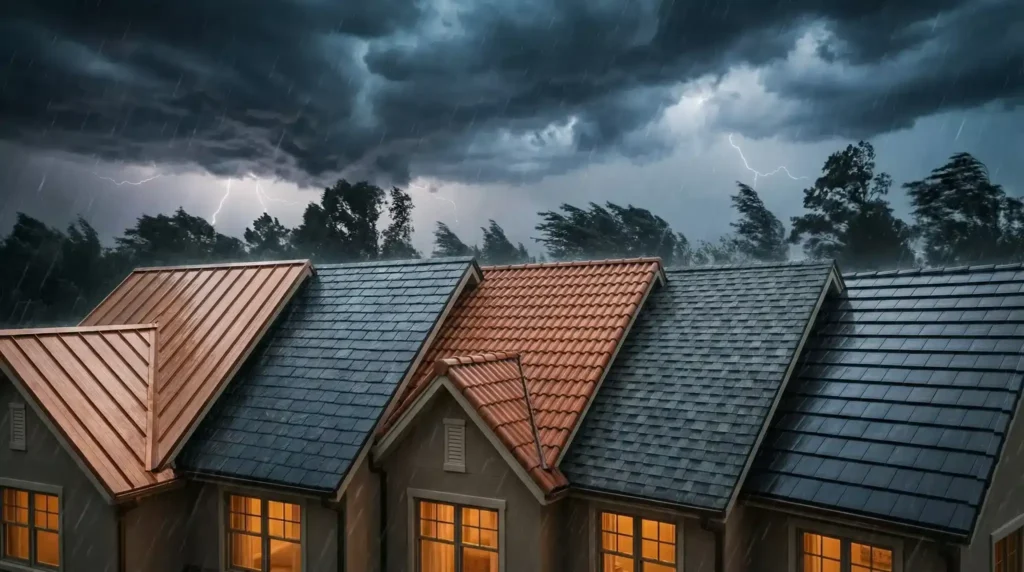
Metal roofs are one of the most popular choices for wet climates. They are highly resistant to water penetration, corrosion-resistant (when coated properly), and have a long lifespan. Rainwater slides off easily, preventing pooling and leakage.
Metal roofing is widely considered one of the most long-lasting roofing solutions for wet weather, especially in regions with frequent storms.
Asphalt Shingles
Asphalt shingles are affordable and widely used, but they require proper installation to perform well in heavy rain conditions. High-quality shingles with waterproof underlayment can provide decent protection.
They are commonly chosen among best roof types for rainy climates due to their cost-effectiveness.
Clay and Concrete Tiles
Clay and concrete tiles are extremely durable and offer excellent water resistance. Their weight helps them stay stable during storms, making them a strong choice for long-term protection.
These are often considered part of moisture resistant roofing materials suitable for tropical and monsoon regions.
Slate Roofing
Slate is one of the most premium and durable roofing materials available. It is naturally waterproof and can last for decades with minimal maintenance. It is ideal for homeowners looking for maximum durability in extreme rainfall conditions.
Slate is widely recognized as one of the best roofing for heavy rainfall areas due to its unmatched lifespan.
Comparison: Metal Roof vs Asphalt Shingles for Rainy Areas
When choosing between metal roofing and asphalt shingles, it is important to understand how each performs in wet conditions.
Metal roofs offer superior durability, faster water drainage, and minimal maintenance. They are ideal for homeowners seeking roofing materials that last long in wet climates.
On the other hand, asphalt shingles are more budget-friendly but may require frequent maintenance in high-rainfall regions. Poor installation can lead to leaks over time, especially during heavy monsoon seasons.
If your priority is maximum durability and weather resistance, metal roofing is often the better choice for which roof is best for extreme rainfall conditions.
Best Roof Design to Prevent Water Leakage
Roof design plays a crucial role in preventing leaks and water damage. Even the best materials can fail if the design is not optimized for rainfall.
A steep-sloped roof is highly effective because it allows rainwater to flow off quickly. Flat roofs require advanced waterproofing systems to avoid water pooling.
Proper integration of gutter protection systems and roof waterproofing solutions ensures that rainwater is directed safely away from the structure.
Good design significantly reduces the risk of leaks and improves overall roof lifespan.
How to Choose Roofing for Heavy Rainfall Climate
Choosing the right roof requires careful evaluation of multiple factors. Homeowners should consider climate conditions, material strength, installation quality, and long-term maintenance costs.
If you live in a high rainfall region, focus on affordable roofing options for rainy weather protection that still offer durability and water resistance.
Professional installation is also essential because even the best materials will fail if not installed correctly.
Understanding how to choose roofing for heavy rainfall climate helps ensure your investment lasts for decades without major repairs.
Roof Maintenance Tips for Rainy Seasons
Regular maintenance is essential to extend roof life in heavy rainfall areas. Even strong roofing systems need periodic inspection.
Key maintenance practices include:
- Cleaning gutters regularly to avoid blockage
- Inspecting for cracks or weak spots
- Checking for early signs of leakage
- Applying waterproof coatings when needed
Proper roof maintenance in rainy season ensures long-term durability and reduces repair costs.
Common Mistakes to Avoid
Many homeowners face roofing issues due to simple mistakes such as choosing low-quality materials, ignoring drainage systems, or delaying maintenance.
Avoiding these mistakes ensures your rain resistant roofing materials perform effectively and last longer.
Conclusion
Selecting the right roofing system is essential for homes located in heavy rainfall zones. The right combination of materials, design, and maintenance can significantly improve durability and prevent costly water damage.
From metal roofing to slate tiles, each option offers unique benefits depending on your budget and requirements. However, the most important factor is choosing a system that supports proper waterproofing and drainage.
By investing in the best roofing options for heavy rain, homeowners can ensure long-term protection, safety, and peace of mind even in the harshest weather conditions.